


Best Dog Harness for Car Travel: Complete Safety Guide
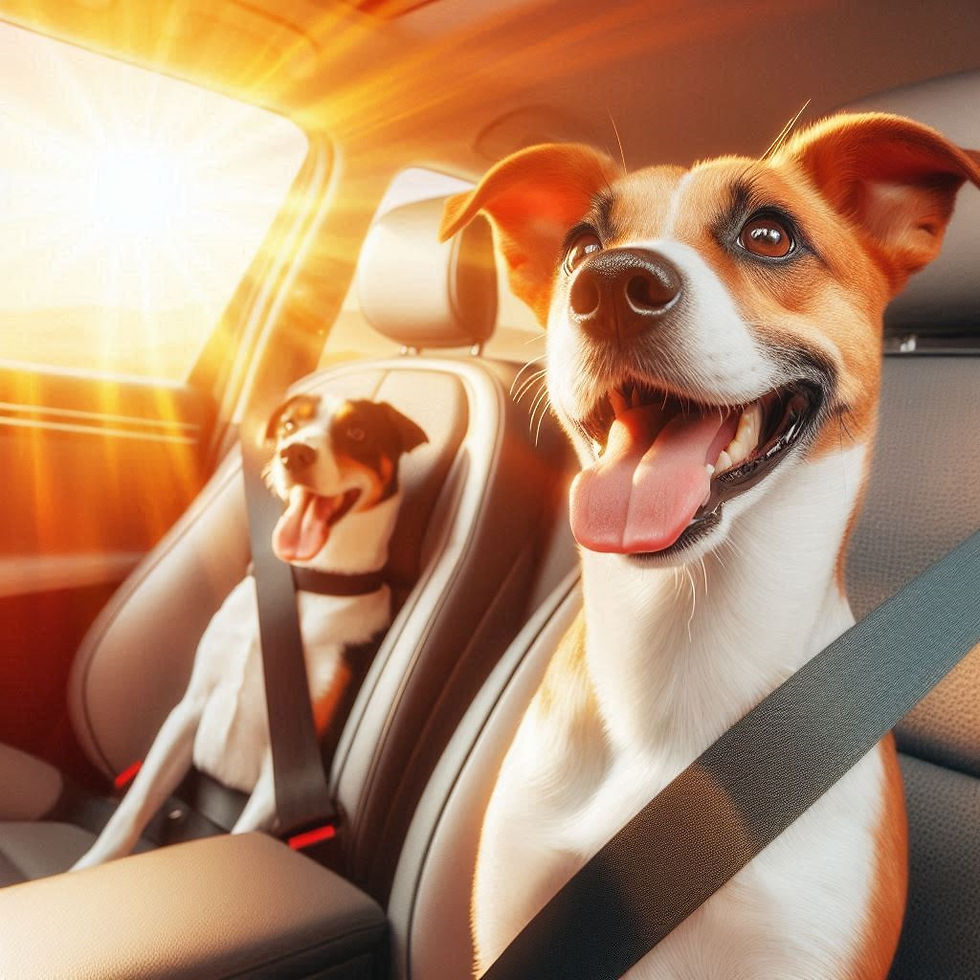
What is the Best Dog Harness for Car Travel? Lets consider what makes a Dog Harness Safe for Car Travel:
Not all dog harnesses are safe for car travel. In a crash at just 40km/h (25mph), an unrestrained 23kg (50lb) dog generates approximately 900kg (2,000lbs) of force - becoming a dangerous projectile that can injure or kill passengers.
If you've read [Part 1: How to Secure Multiple Dogs When You Run Out of Seatbelts] and [Part 2: 3 Ways to Use Your Dog Leash Extender], you know the equipment matters. Now let's talk about choosing the right dog harness for car travel.
Walking Harness vs Car Safety Harness
Walking harnesses are designed for comfort and leash control during everyday activities.
Car safety harnesses must also:
Withstand extreme crash forces (680kg+/1,500lbs+ for a 23kg/50lb dog)
Distribute impact forces safely across the chest
Stay intact during collisions or sudden stops
Keep your dog securely in place without causing injury
Good news: Many quality dog harnesses can do both when properly secured with a dog car restraint so you wont need two types of dog harnesses if you purchase wisely in the first instance.

5 Essential Features for a Safe Dog Car Harness
1. Safety Testing Standards
Look for harnesses tested to one of the recognised standards below:
AS/NZS standards (Australian/New Zealand Standards - what we use!)
FMVSS 213 (US Federal standard)
Centre for Pet Safety (CPS) certification (independent testing)
ECE R-17 and ISO27955 (European standards)
Reality check: Unlike child car seats, dog harnesses aren't legally required to meet safety standards in Australia. Our adjustable car restraints however are tested to the same Australian Safety Standards as used in car seatbelts.

2. Reinforced Materials
A safe dog car harness features:
Heavy-duty webbing
Strong buckles and hardware
Reinforced stitching at stress points
Padded chest plates to distribute forces
Secure attachment points for car restraints
3. Proper Fit (Non-Negotiable!)
The best dog harness won't protect your dog if it doesn't fit correctly. Your harness should:
Be snug but not tight (fit two fingers under straps)
Not allow your dog to slip out
Distribute pressure across chest, not neck
Allow comfortable sitting and lying down
4. Back D-Ring for Car Attachment
For car travel, attach your car restraint to the back D-ring (between shoulder blades). This keeps your dog in a safe, upright position and provides the most secure restraint in a crash.
Front D-rings (chest) are designed for no-pull training, not car safety.
5. Quality Construction
Check for:
Multiple points of contact for force distribution
Padded chest plates protecting vital organs
Reinforced, bar-tacked stitching at stress points
Appropriate webbing width (20-38mm)
Adjustability for different positions
Understanding Crash Test Standards

FMVSS 213: The Gold Standard
Most reputable manufacturers use FMVSS 213 - the same standard for child car seats.
What it involves:
Dynamic crash simulation at 48km/h (30mph)
Life-sized weighted dog dummies
Measurement of excursion (how far forward the dog travels)
Assessment of harness integrity (no breaking or tearing)
Why 48km/30mph seems slow: The test replicates hitting a brick wall. In real crashes, your car's crumple zones absorb impact, making a 48km/30mph crash test roughly equivalent to a 100km/h+ (65mph+) real-world collision.
How to Use Your Dog Harness Safely
Always Use a Dedicated Car Restraint
Never use your regular dog lead or leash. Use a proper dog car restraint that:
Clips securely to seatbelt or anchor point
Is adjustable to keep dog in back seat
Connects to harness back D-ring
At Hendricks and Maple, our adjustable dog car restraints work seamlessly with safety-tested dog harnesses. [Shop Dog Car Restraints in our DOG ACCESSORIES]
Back Seat Only
Front seats: Airbags can seriously injure or kill dogs
Back seats: Safest position (middle seat ideal)
Cargo area: Acceptable if secured, but back seat is safer
Check Fit Before Every Trip
Harnesses can loosen over time. Before each journey:
Ensure straps are properly adjusted
Check buckles are fully closed
Verify car restraint is securely attached
Confirm your dog can't slip out
Using with Dog Leash Extenders
As covered in [Part 1] and [Part 2], 2-in-1 leash extenders let you secure multiple dogs with one seatbelt. When using them:
Both dogs need properly fitted harnesses
Attach dog leash extender to car restraint
Keep combined weight appropriate
Monitor both dogs are comfortable

Common Questions
Q: Can I use my walking harness for car travel? A: Check manufacturer specifications. If there's no mention of crash testing or car safety standards, assume it's not suitable for car travel.
Q: Why not just use a dog collar? A: Never. In a crash, all force concentrates on your dog's neck, causing severe injury or death. Dog harnesses distribute forces safely across the chest.
Q: Do I need different dog harnesses for different dogs? A: Each dog needs their own properly fitted harness whatever design is best for their build, shape and size in alignment with the above recommendations. However, you can secure multiple dogs with one seatbelt using a 2-in-1 dog leash extender - perfect for multi-dog families!
Q: How often should I replace my dog harness? A: Replace if:
It's been in a crash (even minor)
Webbing shows wear or fraying
Buckles or hardware are damaged
Your dog has significantly changed size
Stitching is coming loose
Most quality harnesses last 3-5+ years with normal use.
Q: Are Hendricks and Maple dog harnesses safe for car travel? A: All our dog harnesses are safety-tested and manufactured to meet Australian safety standards. They feature reinforced materials, quality hardware, and secure attachment points and reinforced stitching. When properly fitted and used with our adjustable dog car restraints, they provide excellent protection.

Red Flags to Avoid
✗ No mention of safety testing or standards ✗ Flimsy materials or poor quality plastic hardware ✗ Poor reviews mentioning breakage ✗ No sizing guidance or adjustability of the dog harness
Hendricks and Maple's Complete Car Safety Setup
We use our own gear every day on our own dogs - Hendricks, Maple, Olive and Hazelnut for Blue Mountains adventures.
What you need:
Properly fitted dog harness ([measure correctly first!])
Adjustable dog car restraint (one per seatbelt)
2-in-1 Dog Leash Extender (optional - for securing 2 dogs per seatbelt)
Our standards:
Safety-tested to Australian standards
Quality materials with reinforced stitching and metal hardware
Back D-ring for dog car restraint attachment
Versatile for walking, training, and car travel
Tested on our own dogs before selling
Your Dog Deserves the Best Protection
Car accidents are unpredictable. You can't control other drivers or road conditions. But you CAN control whether your dog is properly secured in a quality harness.
Whether you're running errands, heading to the vet, or planning adventures, your dog deserves to travel safely.
The investment is minimal compared to:
Vet bills from crash injuries
The heartbreak of losing a beloved pet
Injuries to passengers from unsecured dogs
Legal liability if your unsecured dog causes an accident

Ready to Upgrade Your Dog's Car Safety?
Shop our collection:
Safety-tested dog harnesses (multiple styles and sizes)
Adjustable dog car restraints (designed for 3 point seatbelt buckles on most Australian vehicles - note do not use if the adjustable car restraint buckle looks different to your vehicles car seatbelt buckle - it must be the same and fit a 3 point car seatbelt)
2-in-1 Dog Leash Extenders (Liquorice & Latte)
More Helpful Resources
We hope this review has helped you to know the best dog harness for car travel and what to look for! Stay safe, travel smart, and give your pups an extra pat from us!
From our pack to yours, Hendricks, Maple, Olive, Hazelnut & their human
About Hendricks and Maple: Australian-owned and operated designer dog accessories based in the Blue Mountains, NSW. Everything we sell is carefully designed and curated with safety, quality, and style in mind. Named after two of our four beloved dogs, we understand multi-dog household challenges because we live them every day. [www.hendricksandmaple.com]


Comments